
Semantic API: build Peppol-ready logistics integrations
The fastest way to build Peppol‑ready logistics integrations for automated Supply Chains

How it works!
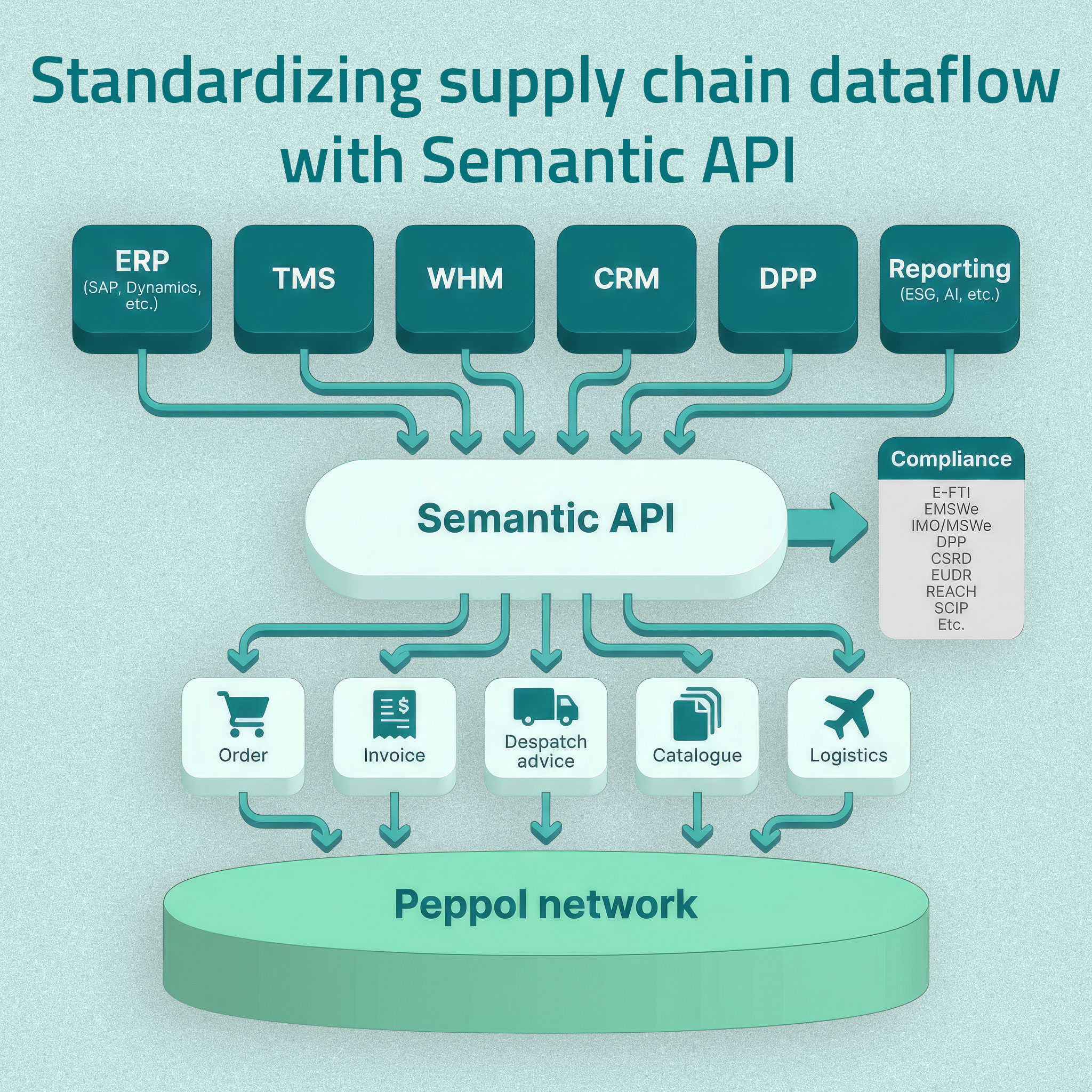
1. Connect your systemsERP, WMS, TMS — Semantic integrates in hours, not weeks, via a flexible, modern API.
2. Your data becomes standardized and compliantSemantic applies PEPPOL standards, validation rules, and global compliance frameworks automatically.
3. Automate and optimize your workflowsFrom transport instructions to invoices and logistics events, processes run seamlessly and intelligently — with full traceability.
4. Gain real-time insightsWith clean, validated, structured data, Semantic enables advanced dashboards, analytics, and AI‑driven decision support.
Seamless data flow from BIM to procurement and execution
With Peppol, data moves cleanly between BIM models, engineers, contractors, and suppliers.
This ensures:
BOM and product specifications flow directly from BIM into procurement
Fewer manual steps, fewer errors, and no retyping of product or component data
Real‑time synchronization between design changes and orderable items
Why it matters:
It removes the traditional data break between planning and procurement, one of the industry's biggest inefficiencies.
A developer experience built for speed
Optimized tools and flows that accelerate build, test, and deployment cycles.
Built for modern enterprise integration
Seamlessly connects complex systems across your entire digital ecosystem.
Webhook support
Instant alerts that keep your workflows responsive and up to date.

Native integration with Microsoft Azure Event Hub
Scalable event streaming to power high‑performance, real‑time operations.
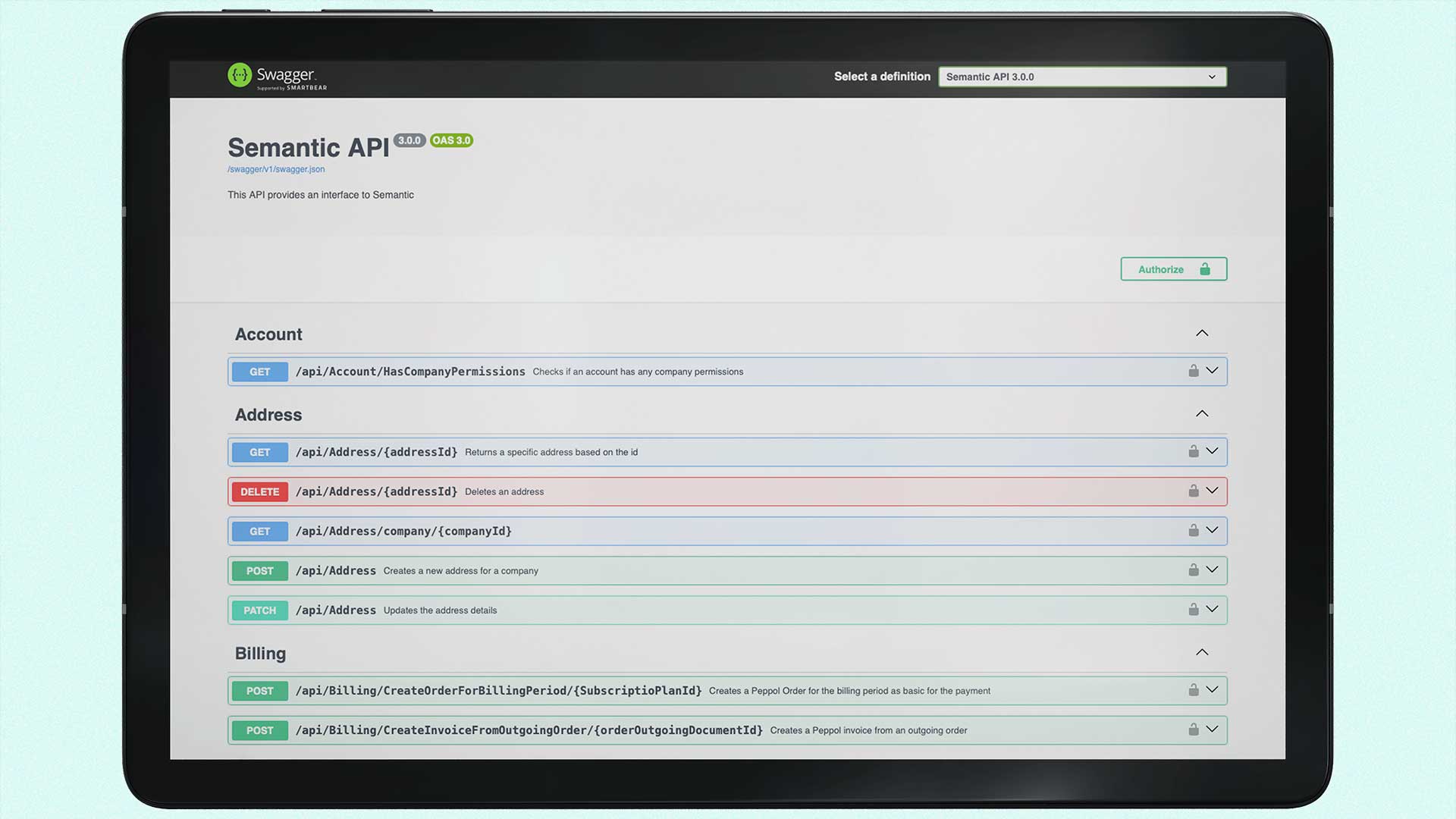
Flexible API endpoints
Integrate effortlessly, no matter your platform or architecture.

Easy to configure Workflow & Compliance
Streamlined setup to ensure consistency, governance, and operational control.
Part of a growing partner ecosystem
Connect instantly to an expanding network of logistics, supply chain, automation, and compliance partners who extend the value of your Semantic API integration.

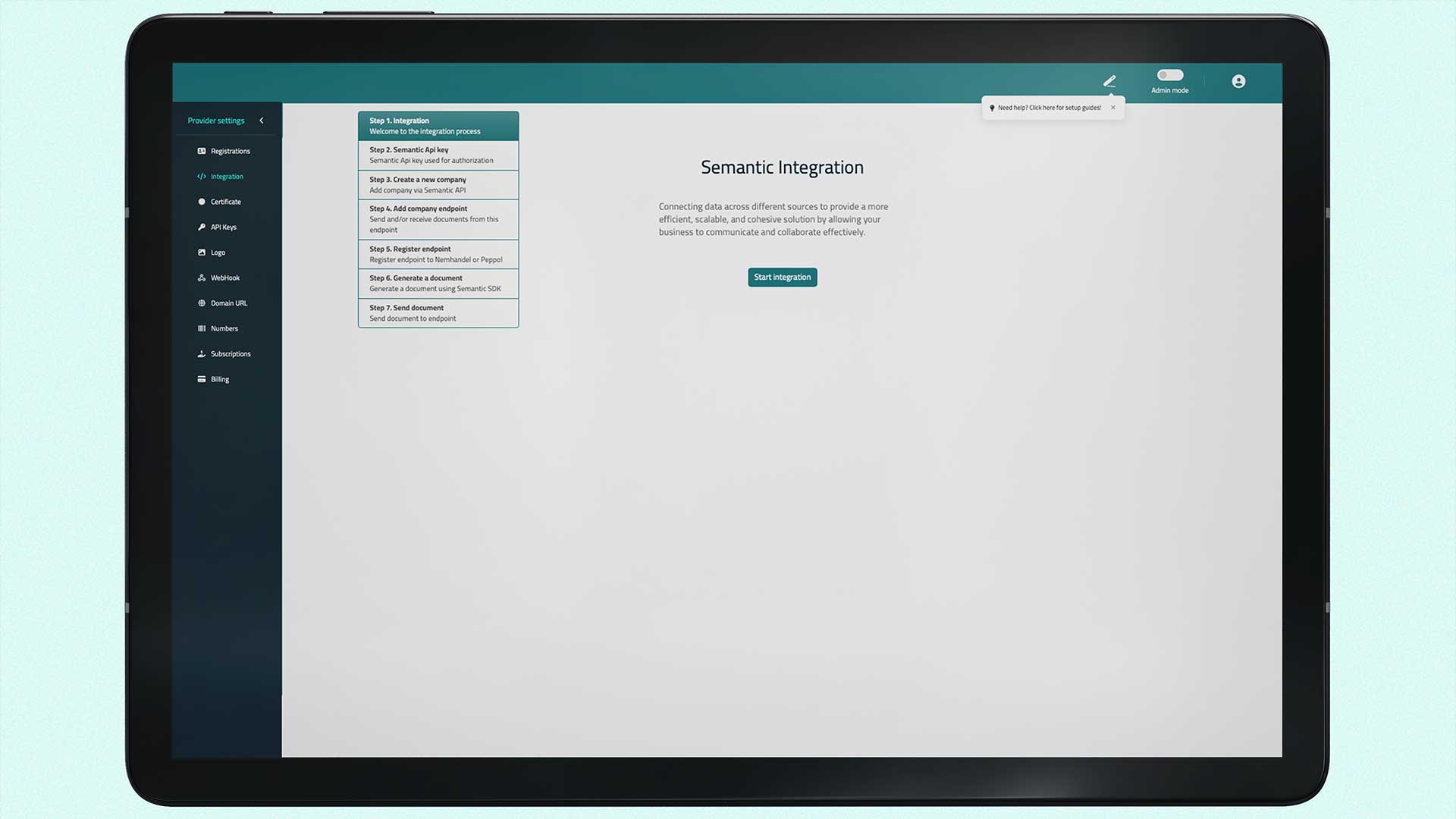
Get started in minutes
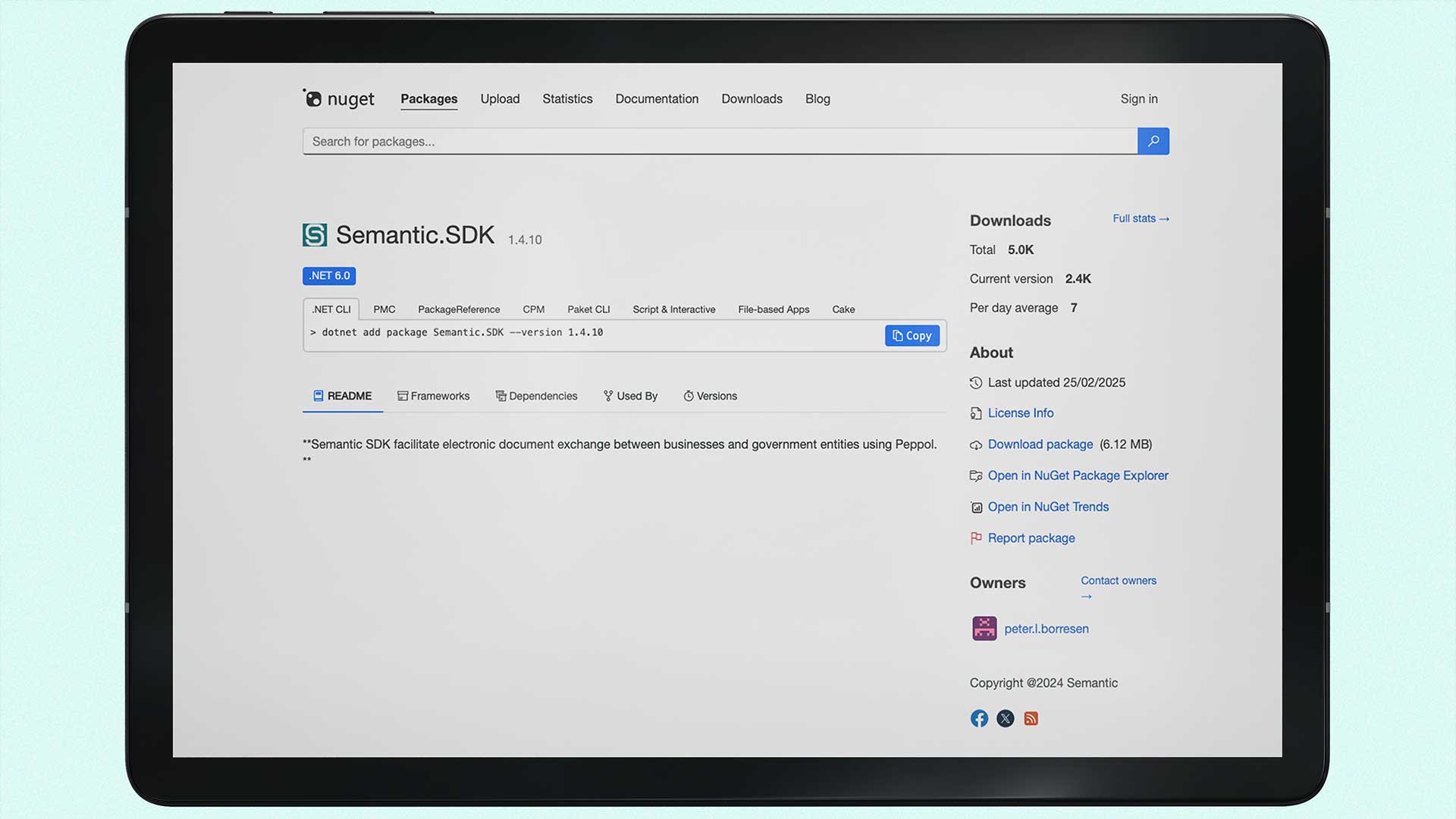
Accelerate your Peppol & Peppol Logistics integration with powerful tools, complete documentation, and an intuitive developer onboarding experience.
Our Semantic Portal gives you a simple and intuitive way to get started with e‑invoicing and e-logistics, fast. Begin for free, explore all essential features, and scale your subscription as your business grows. Choose whether you’re signing up as a company or a service provider, and select the plan that matches your needs and digital ambitions.
Start quickly, integrate effortlessly, and upgrade whenever you’re ready.

"Semantic provides our client the possibility to send and receive invoices and creditnotes directly from Saldi without being bothered with the complex details of the standards."

FAQs
Get quick answers about our PEPPOL API and supply chain data exchange solutions
Our API uses bank-grade encryption and follows strict data protection protocols. We ensure complete confidentiality and integrity of your supply chain information.
You get connected in a few days and fully integrated in two to four weeks. Our implementation partners and technical support team provide comprehensive guidance throughout the deployment process.
Semantic API is designed to be versatile across logistics, manufacturing, construction, retail, and healthcare sectors. Our flexible architecture adapts to diverse supply chain environments.
We offer scalable pricing models based on your business size and data volume. Custom quotes are available to match your specific requirements.
We provide a comprehensive sandbox environment for testing. Developers can explore API capabilities and integration potential before full deployment.
Need more information?
Our experts are ready to answer your specific questions
Ready to transform your supply chain
Contact our experts to discover how Semantic API can revolutionize your data management strategy